Ozzy Osbourne and Brütal Legend: the subject who doesn't repress
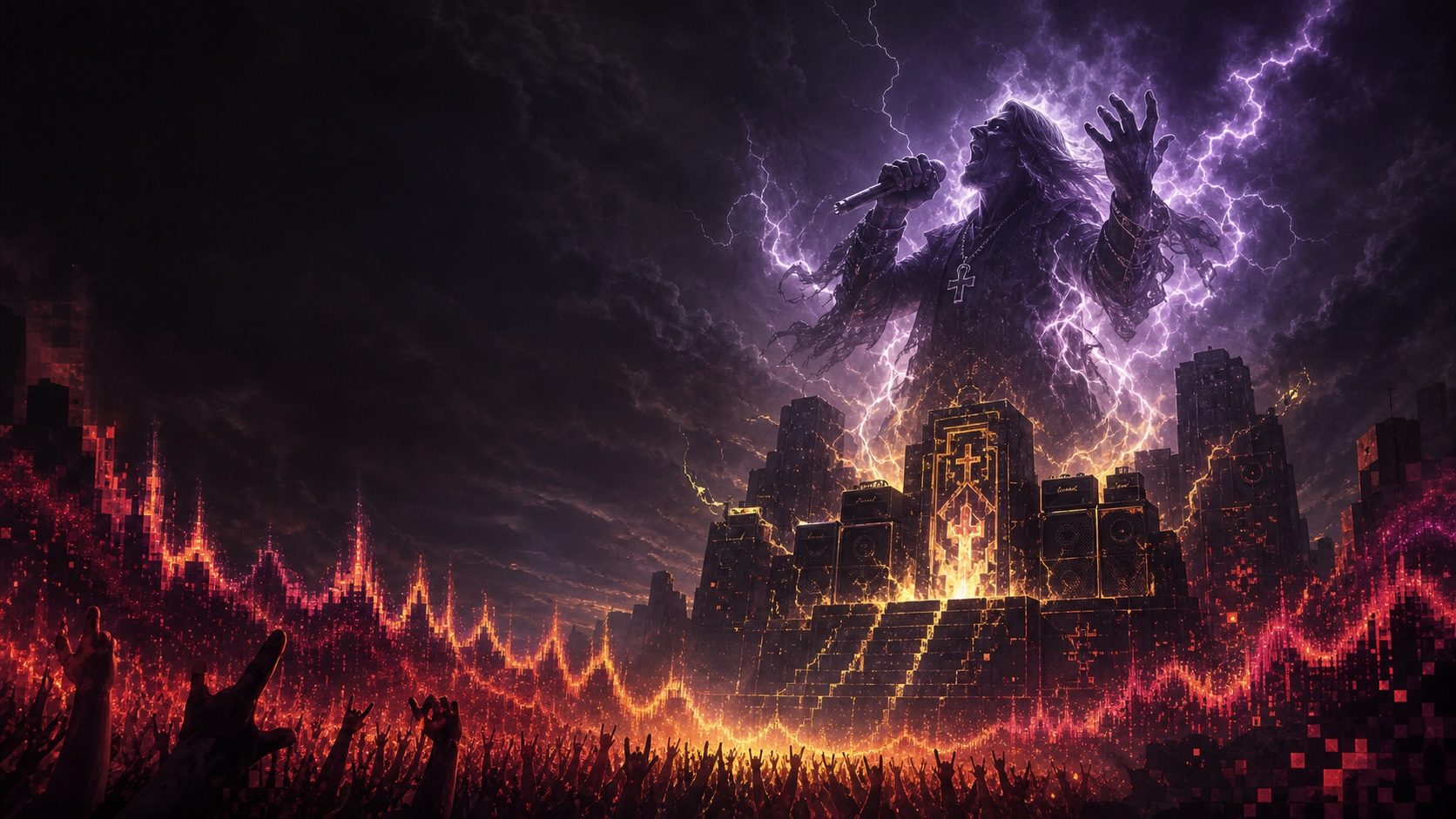
Rock has lost one of its most visceral voices. Ozzy Osbourne, the Prince of Darkness, took his leave of this world in July 2025, at 76. As a psychiatrist, psychoanalyst and fan of rock and video games, I couldn't let it pass. Ozzy was more than an artist: he was a living symptom of excess, a scream that echoed straight out of the unconscious. And yes, the Prince of Darkness reigned in games too.
Brütal Legend: the mythic forge of metal
Among his most memorable appearances is Brütal Legend, released in 2009 by Double Fine. It isn't just a game about heavy metal: it's an epic fever dream, a whole world built from the guts of metal culture. Directed by Tim Schafer and starring Jack Black as the roadie Eddie Riggs, the game throws its protagonist into a dimension made of riffs, skulls and lava, the collective unconscious of metal turned into a playable world. Along the way, the player meets real rock icons voicing the characters: Lemmy Kilmister, of Motörhead, as the Kill Master, a healer who uses his bass to heal; Rob Halford, of Judas Priest, as General Lionwhyte; Lita Ford as Rima. And there's Ozzy, the Guardian of Metal, the figure who, in a secret, flaming forge, hands you your upgrades. In practice, he gives you more power; in the experience, he is the master's recognition, a rite of passage. You don't become a hero of metal without passing through his forge.
A presence that resists virtualization
It's curious how, amid so much virtualization, Ozzy's presence in games preserves something of the real: the real of the body that falters, of the voice that falters, but insists, and, because it insists, it affects us. In Guitar Hero he wasn't just soundtrack, he was playable; you could embody him and feel in your own body that performance in which jouissance spills over through voice and gesture. His music was never meant to soothe, but to shake: scream, rage, mockery, but also vitality. It was life drive disguised as noise.
What can't be repressed
Already frail, Ozzy still turned up in campaigns and unlikely projects, always leaving traces, trying to remain even in the immaterial. It's the drive to persist of a subject who always lived at the edge of dissolution. Like every mythic figure, he lives on in memes too, recreated by fans, circulating among games and avatars, repeating himself, returning as a signifier that insists on not disappearing. A return of the repressed in the form of pop culture: what for others would be the end was, for him, performance.
A farewell without nostalgia
Ozzy was neither a hero nor a role model, he was excess, and that's exactly why he was so true. As a psychoanalyst, I recognize in him the subject who doesn't repress: he says it all, even while stumbling. As a gamer, I thank him for the pixels he inhabited. As a fan, I say goodbye without nostalgia, but with the certainty that certain screams never fade. Wherever there is noise and shadow, he'll be there.

Feeling tempted? Brütal Legend and Ozzy's book are right below, buying through here helps the channel grow. 🤘
Brütal Legend Book: Last RitesThere's also the Brütal Legend version for Xbox 360, for anyone into backward compatibility.
Affiliate links. As an Amazon Associate, this site earns from qualifying purchases, at no extra cost to you.Related
Samurai and ninja: the superego and the shadow that live in you GTA doesn't sell crime: it sells a desire that never endsReferences
Brütal Legend (Double Fine Productions, 2009). · Freud, S., the concept of the return of the repressed and the drive. · Ozzy Osbourne (1948–2025).
Comments
What did you think of this piece? Agree, disagree, have another reading of the game? Drop a comment below, I read them all and love keeping the conversation going. 👇