
Samurai and ninja: the superego and the shadow that live in you
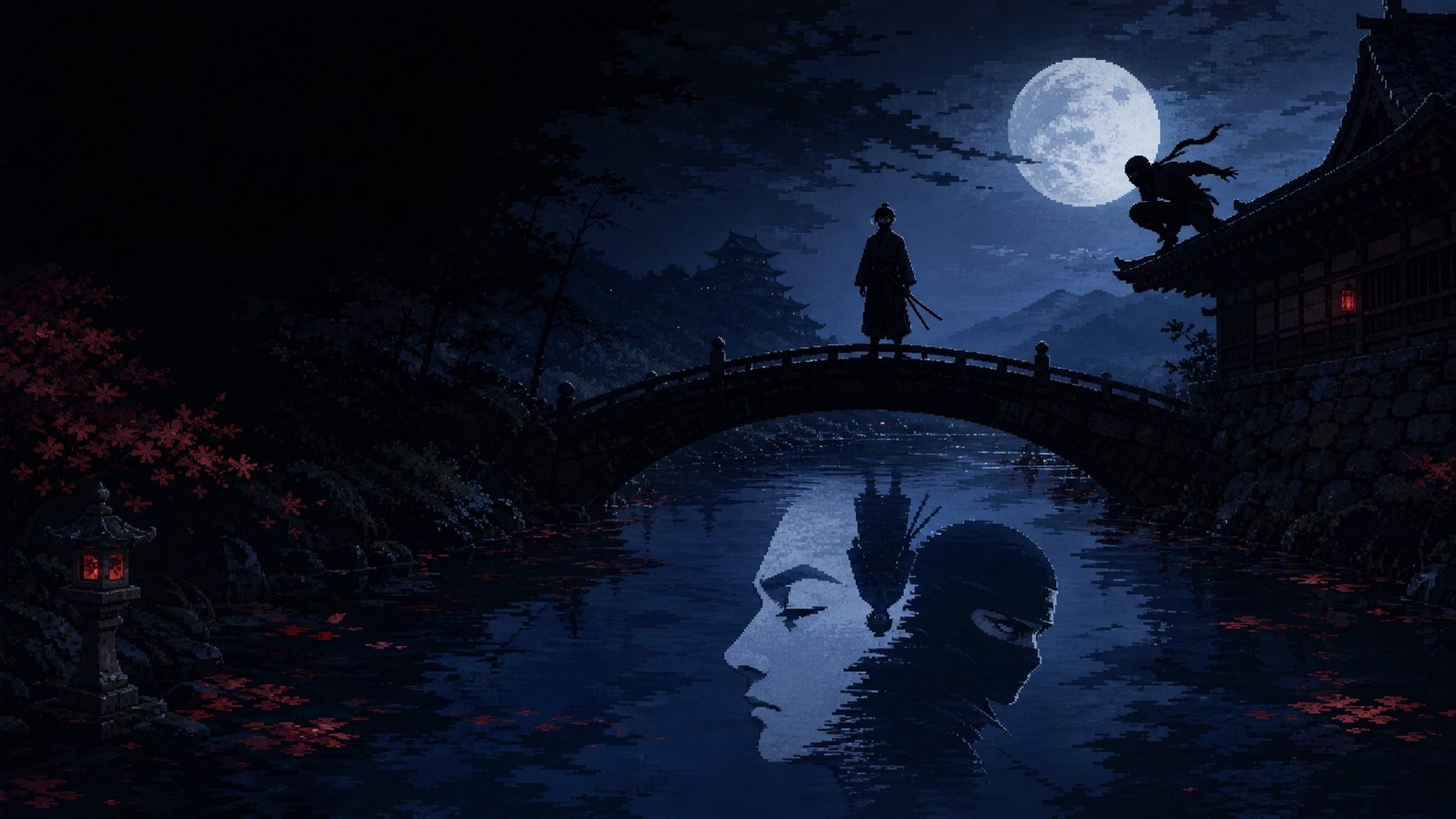
Why do we never get tired of samurai and ninja? In film, in games, in our own fantasies, these figures cross generation after generation. But is the fascination only about swords and epic duels, or do they stir something deeper, hidden in the psyche?
Punishing games and the superego
Anyone who played in the '80s and '90s remembers titles like Shinobi and Ninja Gaiden: hard, punishing, almost cruel in their difficulty. That's no coincidence. These games staged the superego in its most rigid form. With every death the message was clear: you made a mistake and you'll pay for it, but try again, and if you're disciplined, you'll triumph. It was a psychic drill: enduring frustration, repeating the mistake, insisting until you win. Here is what Freud called the compulsion to repeat: the strange satisfaction of dying, trying again, and somehow finding jouissance in that very cycle (Beyond the Pleasure Principle, 1920).
From Kurosawa to Ghost of Yōtei
The fascination began before games. Back in the '50s and '60s, Kurosawa was already showing us complex samurai, full of ethical dilemmas, Seven Samurai (1954) isn't just a battle epic, it's a portrait of honor colliding with poverty and survival. In psychoanalysis, that samurai embodies the tension between the ego-ideal, the wish to be perfect, just, honorable, and the harshness of reality, which always demands some transgression. Contemporary games inherited that drama. In Ghost of Yōtei (as in Ghost of Tsushima), the hero starts out bound to the samurai's code of honor; faced with the invasion, he realizes that following the code to the letter means losing everything. To save his people, he has to betray the ideal and become a ghost, a ninja. It's a clear staging of the conflict between the rigid superego, which demands purity, and the need to bend in order to survive. No one follows an absolute ideal without breaking.
The ninja is the shadow
If the samurai is the law, the ninja is the shadow: the disguise, the silence, the cunning, the one who bends the rules. In the language of psychoanalysis, he represents the id in a mask, what wants to transgress and won't show itself in the light of day. Games like Sekiro take this to the extreme: you die, you start over, you insist. Each death works as a reminder of the limit, in the symbolic sense of castration, which in psychoanalysis is neither death nor punishment, but the inscription that there is a limit, that not everything is possible; each rebirth, a promise of overcoming. That's why the experience is so intense, it places us before our own unconscious, repeating, failing, but always desiring to go further.
Why this captures us
Deep down, samurai and ninja stopped being local symbols and became global archetypes, because all of us understand the tension between order and desire, between discipline and transgression. The samurai is the law, the discipline, the superego. The ninja is the shadow, the id. And games let us live both sides with no guilt and no real punishment, only in fantasy. Maybe that's the question left hanging: do you feel more like a samurai or more like a ninja?

Ready to take up the katana? The games are right below, buying through here helps the channel grow. 🗡️
Ghost of Yōtei Ghost of Tsushima AC ShadowsFor collectors: PS5 console Ghost of Yōtei, DualSense controller Ghost of Yōtei, and the Jin Sakai action figure.
Affiliate links. As an Amazon Associate, this site earns from qualifying purchases, at no extra cost to you.Related
Death Stranding: a world without the Name-of-the-Father GTA doesn't sell crime: it sells a desire that never endsReferences
Freud, S. Beyond the Pleasure Principle (1920), the compulsion to repeat. · The concepts of superego, ego-ideal and id in Freudian theory. · Kurosawa, A. Seven Samurai (1954).
Comments
What did you think of this piece? Agree, disagree, have another reading of the game? Drop a comment below, I read them all and love keeping the conversation going. 👇