
Moral choices in games: guilt, reparation, and Klein's mind
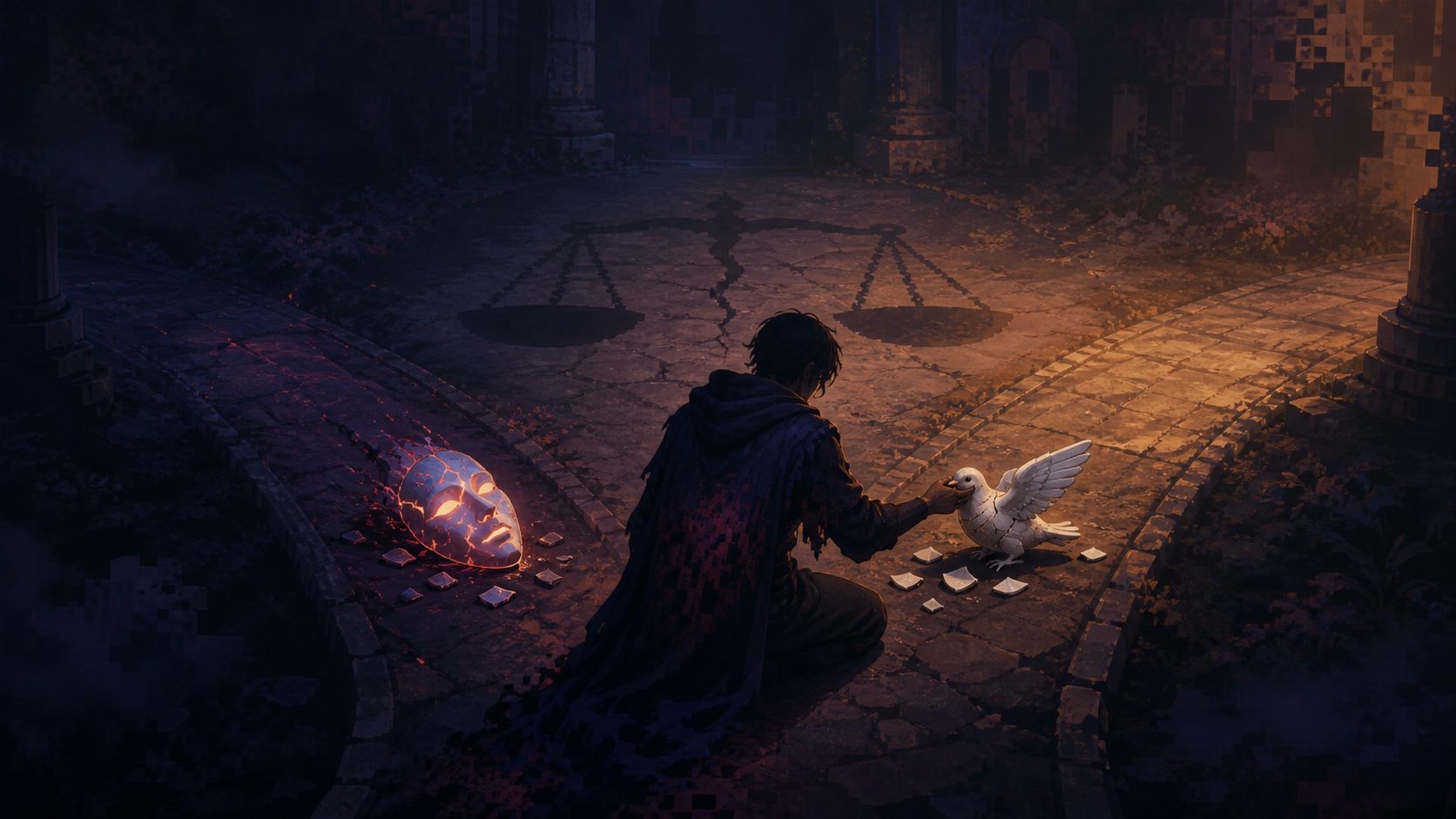
Have you ever sat frozen, controller in hand, unable to press the button? The screen asks for a choice, spare or kill, save this one or save that one, and, even knowing it's fiction, something locks up. Afterward, if you chose "wrong," a residue lingers, a faint weight that follows you for hours. A game can't put you on trial or convict you. So why does the choice weigh so much? The answer lies in a part of psychoanalysis that speaks, precisely, of how we learn to care: the work of Melanie Klein.
Guilt isn't punishment, it's a sign that we love
We tend to think of guilt as something bad, a weight to avoid. Klein saw the opposite: the capacity to feel guilt is a developmental achievement. She described a decisive moment in psychic life that she called the depressive position, when the baby realizes that the mother he loves and the mother he gets angry at are the same person. That discovery brings a new kind of pain: realizing that one's own aggression can hurt the very person one loves. From there guilt is born, not as punishment coming from outside, but as care coming from within: it hurts because it matters.
The game's choice pokes at that guilt
When a game gives you power over the lives of characters, deciding who lives, who suffers, who trusts you and is betrayed, it fires up exactly this machinery. However much reason says "they're just pixels," the part of you that bonded with those characters reacts as if the harm were real. You feel that you could do harm to something you cared about, and that reenacts, in miniature, the Kleinian discovery: my power can hurt what I love. The weight that lingers isn't fear of punishment. It's the echo of the guilt that makes us human.
Reparation: the impulse to mend
Klein also gave a name to what comes after guilt: the desire for reparation, the impulse to mend, to care, to restore what we feel we've damaged. It's one of the mind's most creative forces, the engine of art, of love, and of responsibility. Notice how games tap into this: after a hard choice, many people feel the urge to "make up for it," to do good in the next chapter, sometimes even to start the whole thing over to "do it right." That drive to repair isn't the weakness of an indecisive player, it's the depressive position at work, turning guilt into care.
Why this makes a game unforgettable
The games that stay with us are rarely the ones offering easy choices, good against evil. They're the ones that place you before dilemmas where every option hurts someone, and won't let you wash your hands. That's psychologically powerful because it recreates the adult truth: to live is to choose under uncertainty, with incomplete information, knowing there'll be harm either way. A good dilemma doesn't punish you; it makes you feel the weight of being someone who decides and who cares about the consequences. That's why these choices stay in memory long after we've forgotten the gameplay.
Feeling the weight is taking it seriously
So if a choice in a game has ever cost you sleep, don't think you overreacted. That weight is the sign of a mind mature enough to care about the effect of its own actions, even the fictional ones. The game offered you a safe laboratory to practice the hardest and most human thing there is: choosing while knowing that choosing has a cost, and turning the guilt that lingers into a wish to care better. Klein would be proud of your finger hesitating over the button.
Into this kind of read, psychoanalysis mixed with games? On my Mercado Livre profile I keep a list of games worth the analysis. 😉
My picks (Mercado Livre) Affiliate links (Mercado Livre). This site may earn a commission on qualifying purchases, at no extra cost to you.Related
Red Dead Redemption 2: Arthur Morgan and psychic redemption The Last of Us Part II: why the story falls apartReferences
Klein, M., the depressive position, guilt, and reparation (see Notes on Some Schizoid Mechanisms, 1946, and writings on mourning and reparation).
Comments
What did you think of this piece? Agree, disagree, have another reading of the game? Drop a comment below, I read them all and love keeping the conversation going. 👇