Why the monster that stares back scares you more
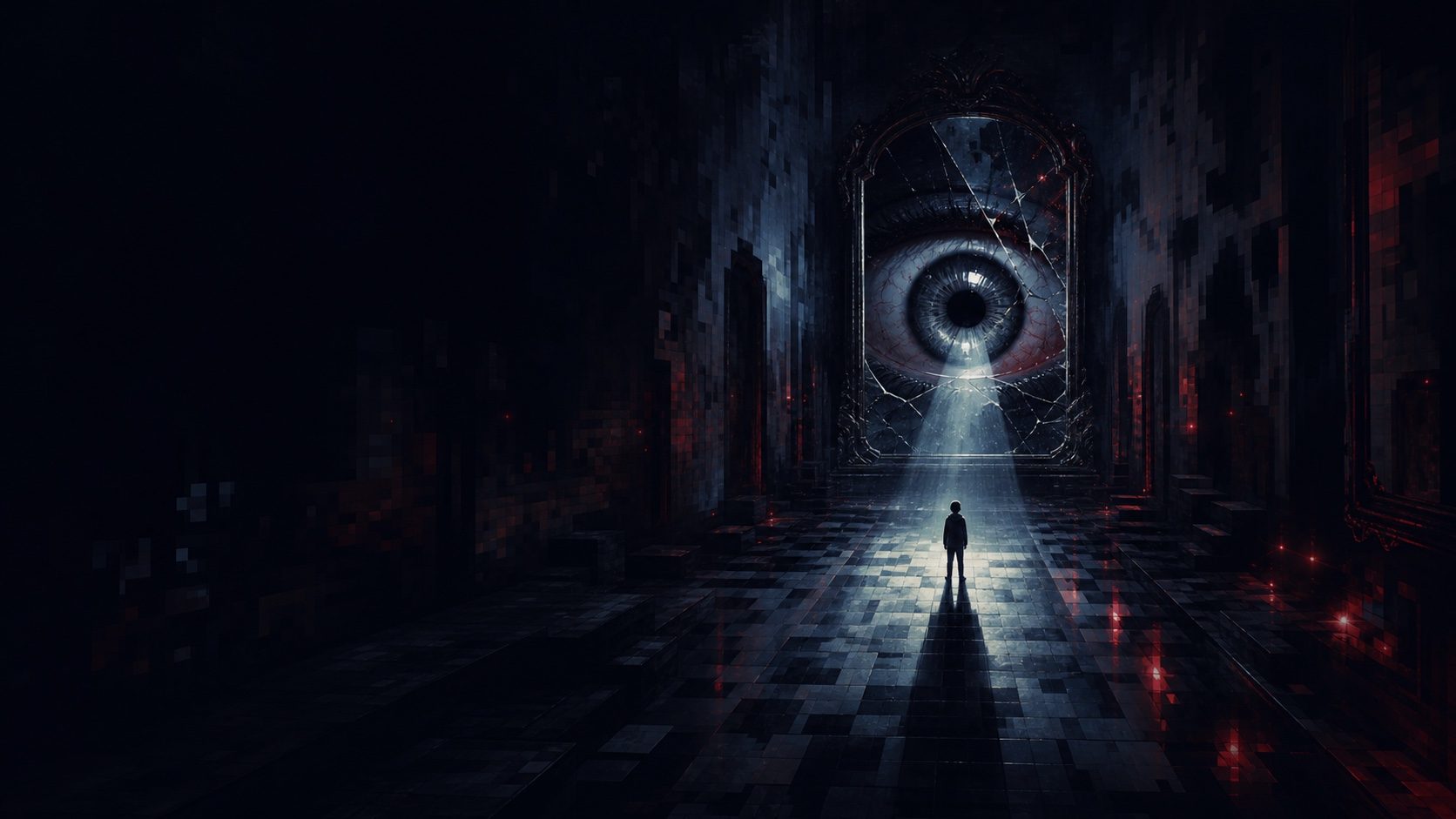
That first zombie in Resident Evil doesn't scare you when it attacks, it scares you when it turns its head and looks at you. In horror games, the most terrifying instant is usually that one: the enemy that hasn't done anything yet, but has noticed you. There's a psychic reason this is worse than the jump scare. It has to do with a concept from Lacan: the gaze.
The gaze isn't what you see
In Seminar XI, Lacan makes a reversal that dismantles our illusion of being in control. We think we're the subject who looks at the world, but before we look, we are already looked at. The world sees us first. Lacan calls this the gaze: not your eyes, but the sense of being exposed to the field of the Other, of being an object in the sights of something that watches you. It's the difference between holding the camera and feeling that the camera holds you.
When the game looks back at you
Horror knows how to exploit this better than any genre. The painting whose eyes seem to follow you. The enemy that stands still, staring, before it comes. The fixed, crooked camera of classic survival horror, which makes you feel watched from a point of view that isn't your own. In Alan Wake, the darkness observes; in Silent Hill, the town notices you. The terror doesn't come from what you see, it comes from the certainty that something is seeing you, and that you are the small, fragile object inside its field of vision.
The anxiety of being seen
It's no accident that stealth games are so tense: the whole mechanic revolves around the fear of being noticed. The enemy's vision cone, the "!" that pops up over its head, the moment it detects you, all of that stages, as a game rule, a most human anxiety: that of being caught, exposed, captured by the other's gaze. To be seen is to lose control over your own image, to become someone's object. Horror turns that everyday anxiety into pure terror.
Why it works so well
Games are the perfect medium for the gaze because the player is, the whole time, in the position of the one who sees the screen, and horror inverts that, making the screen see back. That shiver when an enemy "wakes up" and turns toward you isn't fear of the attack that follows; it's the pure instant of becoming the object of the Other's gaze. Next time a game gives you chills with nothing but a look, you'll know: it isn't the monster. It's the discovery that you were never as in control as you thought.
Into this kind of reading, psychoanalysis mixed with games? Over on my Mercado Livre profile I leave picks for games worth analyzing. 😉
My picks (Mercado Livre) Affiliate link (Mercado Livre). This site may earn a commission on qualifying purchases, at no extra cost to you.Related
Resident Evil and the abject: why the zombie terrifies Silent Hill 2 isn't about monsters: it's about guiltReferences
Lacan, J., The Seminar, Book XI (1964): the gaze as object a and the split between the eye and the gaze.
Comments
What did you think of this piece? Agree, disagree, have another reading of the game? Drop a comment below, I read them all and love keeping the conversation going. 👇