Hellblade: what psychosis looks like from the inside
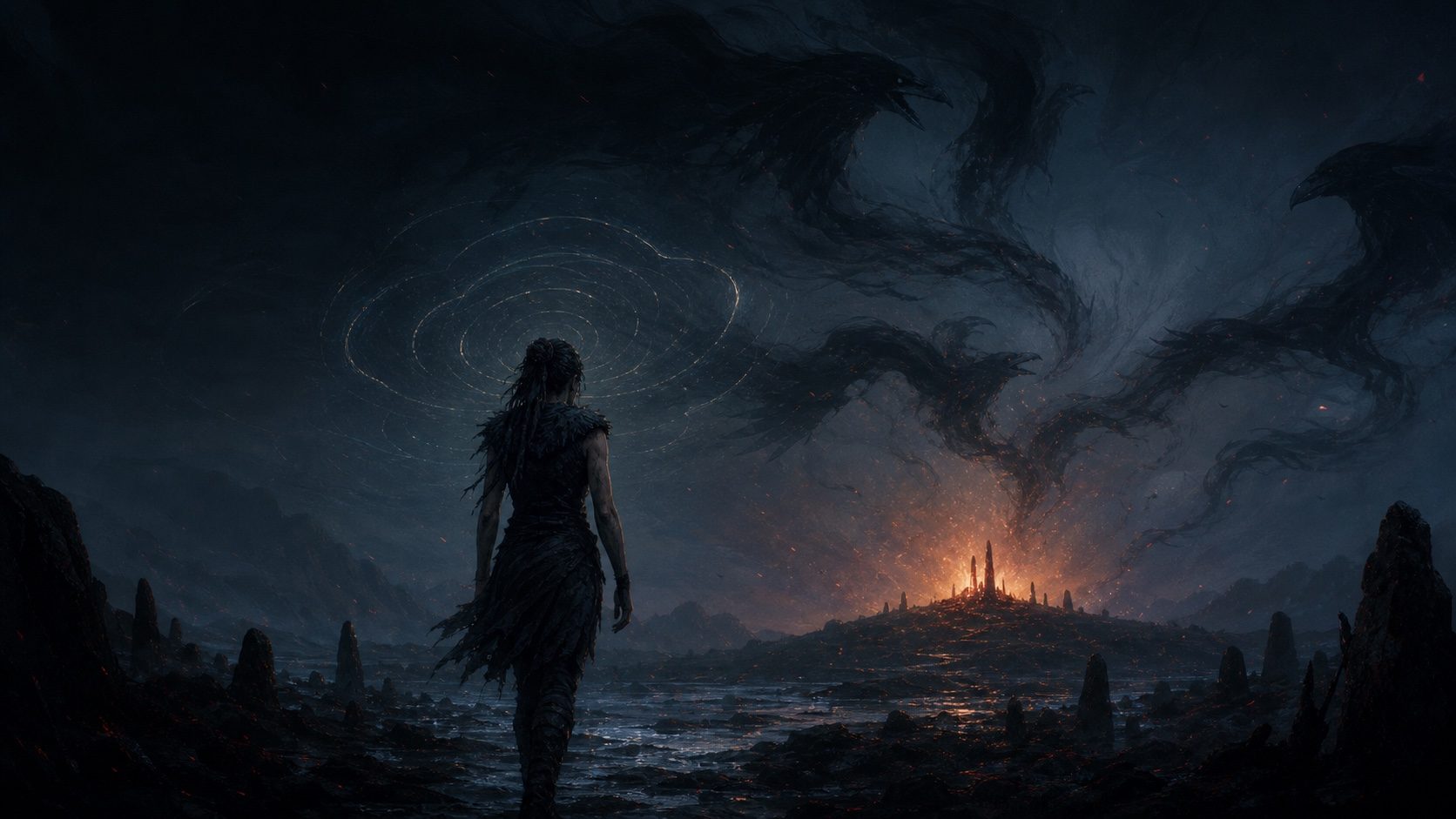
Put your headphones on before you play Hellblade: Senua's Sacrifice, the game asks for it right at the start. And it isn't immersion flourish. It's that, from there on, you're going to hear voices that whisper, murmur, quarrel with each other and comment on Senua's every step. These voices aren't a soundtrack. They're a symptom. Hellblade does something almost no work manages to do: it places you inside the experience of psychosis. And, as a psychiatrist, I have to say, it's the most honest portrait of it that video games have ever produced.
No accident: the game was made with neuroscientists and, above all, with people who live psychosis firsthand. That changes everything, and it's already the first reason to take it seriously.
The voices aren't a trick, they're the point
The auditory hallucination, psychosis's most iconic symptom, is usually shown from the outside in films: someone talking to themselves, frightening, "crazy." Hellblade turns the camera around. You hear what Senua hears, in binaural audio, coming from every side. Some voices protect her, others humiliate her, others doubt everything. It's exhausting, and that's exactly the goal. The game makes you feel, for a few hours, what it is to never be alone inside your own head, what it is to have your perception invaded without permission. After playing, you'll never read the word "schizophrenia" the same way again.
The journey to the underworld is a grief that won't close
The plot begins with a loss: Dillion, Senua's love, was brutally killed. And she does what the grieving mind sometimes does at its limit, she refuses death. She undertakes a journey to the Norse underworld to wrest his soul from the goddess Hela, carrying a piece of him with her. This echoes something I already touched on in the analysis of Death Stranding 2: the psychotic denial of loss, living as if the dead could still be recovered. Psychosis and extreme grief touch precisely here, at the point where accepting that the person is gone becomes too unbearable, and the mind invents another reality so as not to collapse.
The "darkness" and the father's voice
Little by little, the game reveals where the cruelest voices come from. Senua's father, Zynbel, treated her condition as a curse, a "darkness" that had to be purged, and isolated her as if she were accursed. That voice didn't die with him: it stayed inside her, accusing, condemning, saying everything is her fault. Psychoanalysis recognizes this at once. Melanie Klein would describe these persecutory voices as internal objects, pieces of real figures the mind has swallowed and which then attack from within; they are more archaic and concrete than the superego proper. And, alongside them, the internalized father functions as a cruel superego, that agency which doesn't guide, only punishes. Senua's trauma isn't only what was done to her; it's what she began to do to herself, with the voice she inherited from the one who should have protected her.
There's a further layer, and it comes from Wilfred Bion. For him, the infant only transforms raw terror into something thinkable when someone, the mother, in her reverie, receives that terror, metabolizes it and hands it back bearable (what he called the alpha function). When this fails, what's left are "beta elements": raw, undigested sensation that doesn't become thought and returns as persecution. Senua's voices are exactly this, dread that never found anyone to transform it into words. Hellblade is, in that sense, a treatise on what happens when the mind that helps you think the unthinkable is missing.
The real horror: not being able to trust your own perception
Hellblade is frightening, but not because of the monsters. The real terror is epistemological: it's not knowing what is true. Does that bridge exist, or is it a hallucination? Is that enemy real? Is the threat of "permanent death" the game hints at concrete, or one more lie the illness tells? To live like this is to live with no ground beneath you, without the basic certainty that what you see is what's there. The game turns that anguish into a mechanic, and, in doing so, it communicates with a force no lecture could what it is to inhabit a mind that has lost its anchor in the real.
Why this truly matters
There's a value here that goes beyond the game. Psychosis is one of the most stigmatized conditions there is, the dangerous "madman" of the popular imagination is very far from the clinical reality, where the person in psychotic suffering is, in the overwhelming majority of cases, someone frightened, isolated and far more at risk than dangerous. Hellblade gives that experience its dignity back. It doesn't ask you to pity Senua; it asks you to understand her, to walk alongside her, to feel her weight and also her courage. And, importantly: psychosis is treatable, and no one has to go through it alone. Turning suffering into empathy is, in the end, the most beautiful thing pop culture can do. Hellblade does it.

Interested in Hellblade? Grab it here and help the channel grow. 🎮
Hellblade (PS4) Hellblade (Xbox) Affiliate links. As an Amazon Associate, this site earns from qualifying purchases, at no extra cost to you.Related
Death Stranding: a world without the Name-of-the-Father Silent Hill 2 isn't about monsters: it's about guiltReferences
Klein, M., persecutory internal objects and the paranoid-schizoid position. · Bion, W. R., alpha function, reverie and beta elements. · Freud, S., the superego as critical and punishing agency. · Hellblade was developed in collaboration with neuroscientists and people with lived experience of psychosis.
Comments
What did you think of this piece? Agree, disagree, have another reading of the game? Drop a comment below, I read them all and love keeping the conversation going. 👇